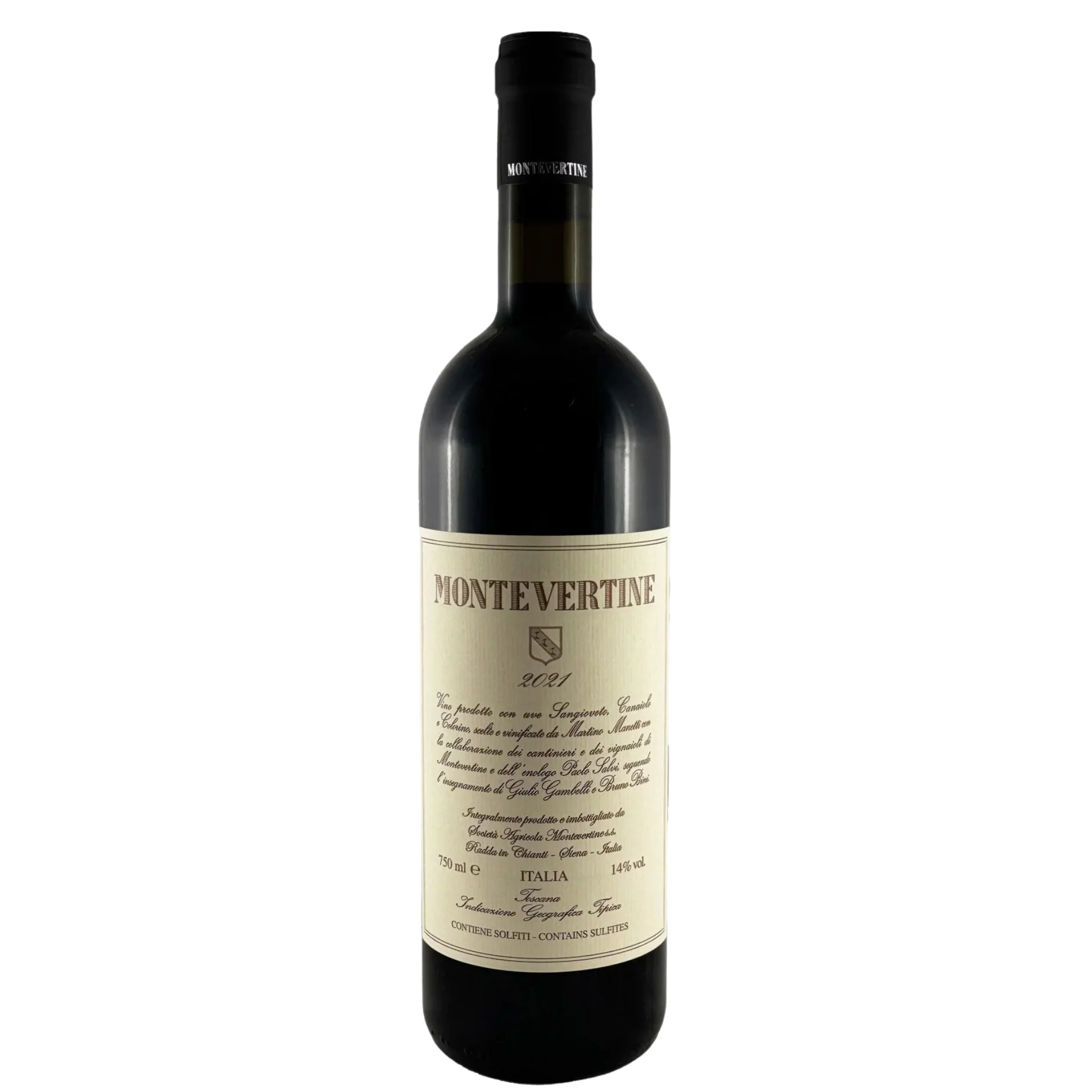
2021 Montevertine Rosso di Toscana, Tuscany, Italy
ABOUT THIS WINE
Montevertine Rosso di Toscana is predominantly composed of Sangiovese, with small additions of Canaiolo and Colorino. The grapes are hand-harvested and fermented in large cement tanks for approximately 25 to 30 days, allowing for long, slow extractions with regular pump-overs. Malolactic fermentation occurs in cement tanks before the wine is racked into large Slavonian oak barrels, where it ages for about 24 months. The wine is bottled without filtration and held in bottle for at least six months prior to release, ensuring clarity and stability.
ABOUT THIS PRODUCER
Montevertine, situated at an elevation of 425 meters in Radda in Chianti, spans approximately 18 hectares, with 90% planted to Sangiovese and the remainder to Colorino and Canaiolo. The estate employs organic farming practices, refraining from synthetic chemicals to maintain vineyard health and balance. While not officially certified, their methods align with organic and biodynamic principles, including the use of homemade compost and traditional sprays when necessary. The vineyards benefit from soils composed of galestro and alberese, contributing to the distinctive minerality and structure of their wines.
Original: $136.99
-65%$136.99
$47.95Product Information
Product Information
Shipping & Returns
Shipping & Returns
Description
ABOUT THIS WINE
Montevertine Rosso di Toscana is predominantly composed of Sangiovese, with small additions of Canaiolo and Colorino. The grapes are hand-harvested and fermented in large cement tanks for approximately 25 to 30 days, allowing for long, slow extractions with regular pump-overs. Malolactic fermentation occurs in cement tanks before the wine is racked into large Slavonian oak barrels, where it ages for about 24 months. The wine is bottled without filtration and held in bottle for at least six months prior to release, ensuring clarity and stability.
ABOUT THIS PRODUCER
Montevertine, situated at an elevation of 425 meters in Radda in Chianti, spans approximately 18 hectares, with 90% planted to Sangiovese and the remainder to Colorino and Canaiolo. The estate employs organic farming practices, refraining from synthetic chemicals to maintain vineyard health and balance. While not officially certified, their methods align with organic and biodynamic principles, including the use of homemade compost and traditional sprays when necessary. The vineyards benefit from soils composed of galestro and alberese, contributing to the distinctive minerality and structure of their wines.